Tilak Varma’s Century Comes Under Scrutiny After India A Lose to Pakistan Shaheens
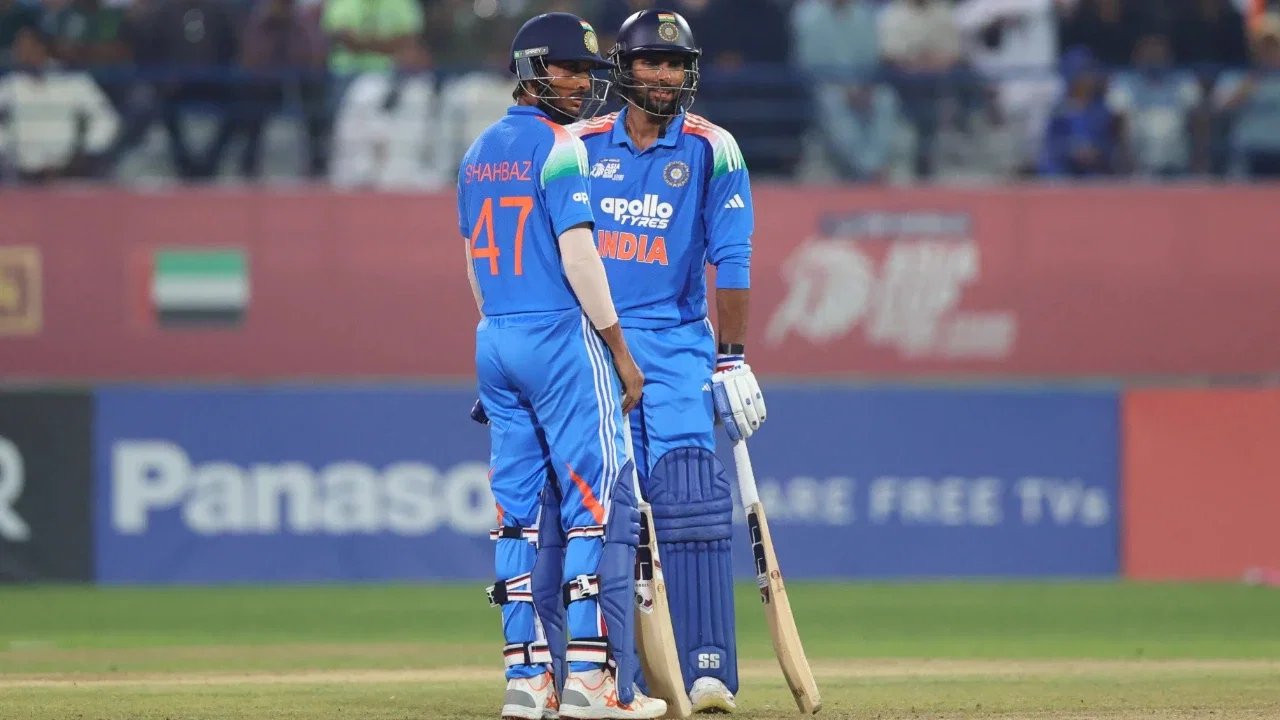
Tilak Varma scored a century, but it was not enough to prevent India A from falling to a 48-run defeat against Pakistan Shaheens in a Men’s Asia Cup Rising Stars match on Sunday, November 22. The India A captain’s innings became a major talking point after former India batter and coach Sanjay Bangar criticised the pace of his chase.
India A were pursuing a target of 314, a demanding total that called for both composure and regular scoring opportunities. Varma stayed at the crease for much of the innings, making 100 from 149 balls, with seven fours and one six. Yet his measured approach left India A with a steep challenge as the required rate climbed, and Pakistan ultimately secured a convincing victory.
Why Tilak Varma’s Century Drew Criticism
Varma is widely regarded as an attacking batter, making the tempo of his innings particularly striking. He took 26 deliveries to score his first three runs and had made only eight after facing 36 balls. His scoring rate improved later, but the slow start placed pressure on the chase and limited the time available for India A to accelerate.
Bangar argued that the issue was not simply Varma’s individual strike rate. In a chase of more than 300, a batter’s approach can influence the decisions made at the other end. If the set batter is focused on preserving his wicket and expects to catch up later, his partner may hesitate to take risks—or feel compelled to attempt them without enough support.
“Tilak Varma made three runs off the first 25 balls he faced, then in the next 25 balls he scored 12 or 13 runs,” Bangar said. He questioned what such a start could mean for a partner trying to judge whether to rotate the strike, attack the bowlers or protect their own wicket.
The pressure of waiting to accelerate
Bangar’s central concern was that Varma appeared confident he could make up the required rate later in the innings. That strategy can work when wickets are in hand and the batting side has enough overs remaining. But on a turning pitch, delaying the acceleration can give the bowling team time to settle into a rhythm and build pressure.
Once the required rate rises, batters may have to take greater risks against established bowlers. That can create opportunities for fielding sides to attack with close catchers and force mistakes. In this match, Pakistan were able to maintain control while India A struggled to find a consistent flow of runs.
Varma was eventually dismissed by Ahmed Daniyal after reaching his hundred. His innings showed patience and resilience, but the wider question for India A was whether that patience came at too high a cost in a chase that demanded more frequent scoring.
Hasan Nawaz’s Full Spell Helped Pakistan Control the Chase
Bangar also highlighted Pakistan’s use of Hasan Nawaz, who completed all 10 overs and took three wickets at an economy rate of 4.50. The pitch offered assistance to spin, and Nawaz’s full allocation allowed Pakistan to apply pressure through the middle overs without having to turn to less effective options.
According to Bangar, India A could have tried to disrupt the spinner’s rhythm by using a right-left batting combination. Alternating between left- and right-handed batters can change a bowler’s line and length, complicate field placements and create more opportunities to rotate the strike. It is not a guaranteed solution, but it can make a spinner’s task less predictable.
“On such a turning track, certainly an effort should have been made to use the right-left combination, which would have enabled better strike rotation,” Bangar said. He added that this might have prevented Pakistan from using Nawaz for his full 10 overs.
Strike rotation matters on a turning pitch
Against spin, boundaries are not the only way to keep a chase moving. Quick singles, well-placed shots into gaps and changes in the strike can help batters avoid becoming trapped by a bowler who is controlling the pace of the game. When scoring stalls, the bowling side can set attacking fields and force batters to manufacture shots.
India A’s challenge was to balance caution with intent. Protecting wickets is important when chasing a large total, but a conservative start can leave the team with too much to do later. A more flexible plan—one that combines steady strike rotation with selective boundary-hitting—may have helped keep the required rate within reach.
What the Result Means for India A’s Batting Approach
The defeat offers a useful lesson for a young side still developing its approach to high-pressure chases. A century is a significant personal achievement, but its value in a team chase also depends on timing, scoring rate and the contribution of partners. India A will likely review how the innings was paced, particularly during the early overs and the middle phase against spin.
Varma’s performance should not be judged only by the final result. His ability to bat for a long period and reach three figures demonstrated concentration and determination. However, Bangar’s criticism points to a broader tactical issue: when a target is as high as 314, teams need a clear plan for when to consolidate and when to attack.
For India A, the most important takeaway may be the need to make decisions earlier in the chase. Rotating the strike, changing the match-up against spin and maintaining a realistic required rate can prevent pressure from building around one batter. In future fixtures, those adjustments could be as important as individual milestones—and may shape the team’s prediction for success in similar high-scoring contests.