Prema Rawat Sets Women’s T20 Record With 14-Ball Half-Century
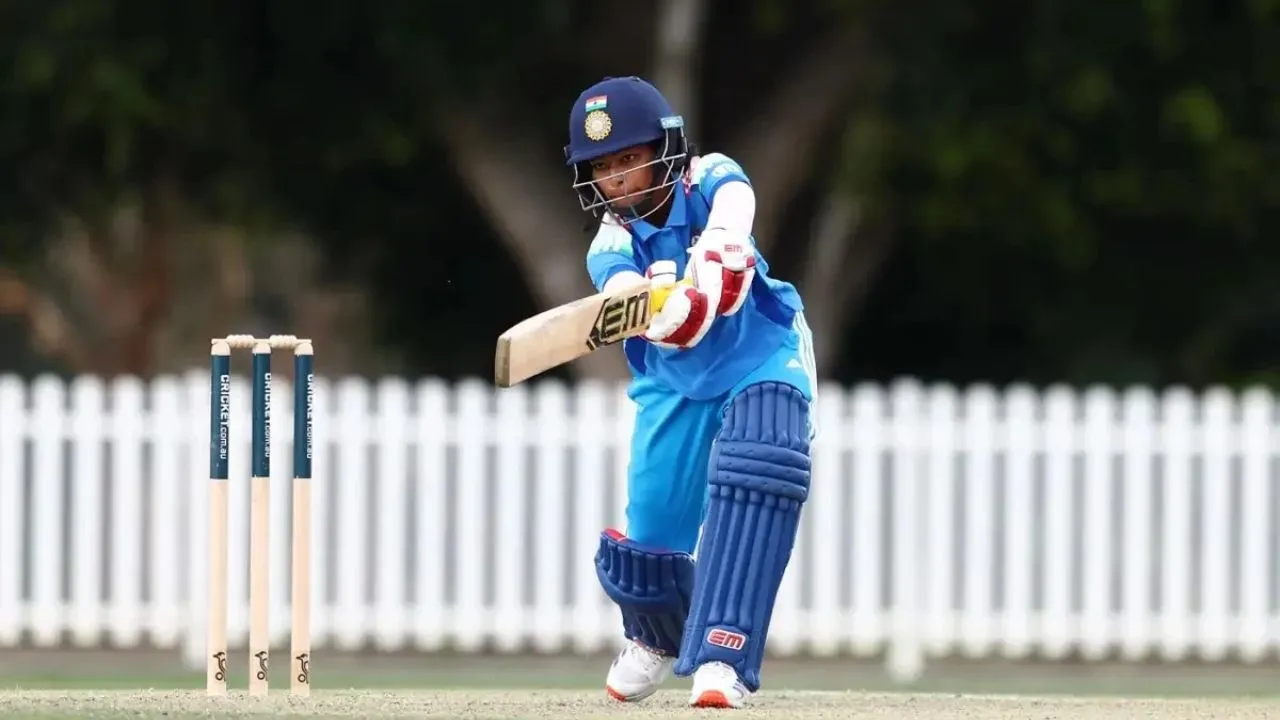
Uttarakhand all-rounder Prema Rawat produced a remarkable display of power-hitting at the Senior Women’s T20 Trophy, reaching a half-century in just 14 balls to set a new record for the fastest fifty in women’s T20 cricket. Her explosive innings helped Uttarakhand defeat Hyderabad by 89 runs in their Elite match at the MCA Cricket Stadium in Gahunje, Pune.
The 24-year-old’s achievement is another sign of the growing depth and attacking ambition in Indian women’s cricket. Rawat, who represents Royal Challengers Bengaluru (RCB) in the Women’s Premier League (WPL), combined a rapid scoring burst with a valuable contribution as a bowler. Her performance earned her the Player of the Match award and gave Uttarakhand a dominant victory.
Rawat Breaks the Fastest Fifty Record
Batting first after Uttarakhand won the toss, Rawat came in during a strong innings and wasted little time putting pressure on Hyderabad’s bowlers. She finished unbeaten on 50 from only 14 deliveries, striking six fours and four sixes. Her strike rate of 357.14 reflected the extraordinary pace of her innings.
Rawat’s half-century surpassed the previous benchmark of 15 balls. Pakistan captain Fatima Sana had reached the mark in 15 deliveries, while England’s Marie Kelly first set the women’s T20 record with a 15-ball fifty for Warwickshire against Gloucestershire in 2022. Laura Harris later matched that achievement for Otago against Canterbury in 2025.
While Rawat’s innings established the fastest fifty in women’s T20 cricket overall, records in domestic and international matches are tracked separately. Fatima Sana continues to hold the record for the fastest half-century in a Women’s T20 International, having reached 50 in 15 balls. That distinction highlights the difference between a record across all women’s T20 matches and one achieved specifically in international cricket.
How Rawat’s innings changed the match
Rawat’s contribution arrived in an innings already built on a solid foundation. Uttarakhand’s openers, skipper Raghvi Bisht and Kareena, put together 72 runs for the first wicket. Kareena added 44, giving the team a confident start, while Bisht carried on to score 72 from 50 balls, including five fours and four sixes.
Rawat’s late acceleration transformed a strong platform into a formidable total. Uttarakhand reached 187 for two in 20 overs, finishing with the kind of momentum that can make a chase difficult even before the opposition begins to bat. Her boundary-heavy approach also demonstrated how quickly a well-set batter can shift a match’s direction in the shortest format.
Hyderabad Struggle in the Chase
Hyderabad never found the steady partnerships needed to keep pace with the required run rate. Wickets fell regularly, leaving the side unable to build pressure on Uttarakhand’s bowlers. Gugulothu Kavyasree top-scored with 25, but Hyderabad finished on 98 for eight from its 20 overs.
The 89-run margin reflected Uttarakhand’s control across both innings. The team’s batting effort gave its bowlers a substantial total to defend, and Hyderabad’s repeated setbacks prevented a late recovery. Rawat’s two wickets added further value to her match-winning performance, making her impact significant with both bat and ball.
Women’s T20 Records and the International Benchmark
Several players have delivered exceptionally fast half-centuries in women’s T20 cricket. Before Rawat’s record-breaking effort, Kelly and Harris had reached the milestone in 15 balls, as had Fatima Sana. In the international game, other notable rapid fifties include 18-ball efforts by New Zealand’s Sophie Devine, Australia’s Phoebe Litchfield and India’s Richa Ghosh. Ghosh remains the Indian player with the fastest fifty in international T20 cricket.
These records offer a useful snapshot of how women’s T20 batting has evolved. More players are now expected to score quickly, use the full range of the field and take calculated risks from the outset. A 14-ball fifty is an exceptional achievement, but it also reflects a broader shift toward aggressive, high-tempo cricket across domestic competitions.
Why Rawat’s Record Matters for Indian Women’s Cricket
Rawat’s performance arrives at a time when interest in women’s cricket is growing in India. The national team’s success, along with the visibility created by the WPL, has helped bring more attention to domestic players and emerging talent. The league has also offered uncapped cricketers opportunities to compete alongside established international stars, gain experience and build a larger audience.
Rawat’s association with RCB gives her a connection to one of the WPL’s most followed teams, while her Uttarakhand performance provides a reminder that domestic tournaments remain crucial to the development of the game. They give players space to establish themselves, test their skills under pressure and make a case for higher honours.
For supporters following the Senior Women’s T20 Trophy, Rawat’s record may also shape prediction and conversation around the tournament’s standout performers. Still, one extraordinary innings does not guarantee future results: consistency, fitness and contributions in different match situations will determine how far a player can progress. What is certain is that her 14-ball fifty has set a striking new benchmark.
Uttarakhand’s emphatic win and Rawat’s historic knock made the Pune match memorable for more than its margin. The all-rounder delivered a record-breaking innings, helped her side post a commanding total and then contributed with the ball. As women’s T20 cricket continues to attract new fans, performances like this underline the growing quality, confidence and entertainment value of the domestic game.