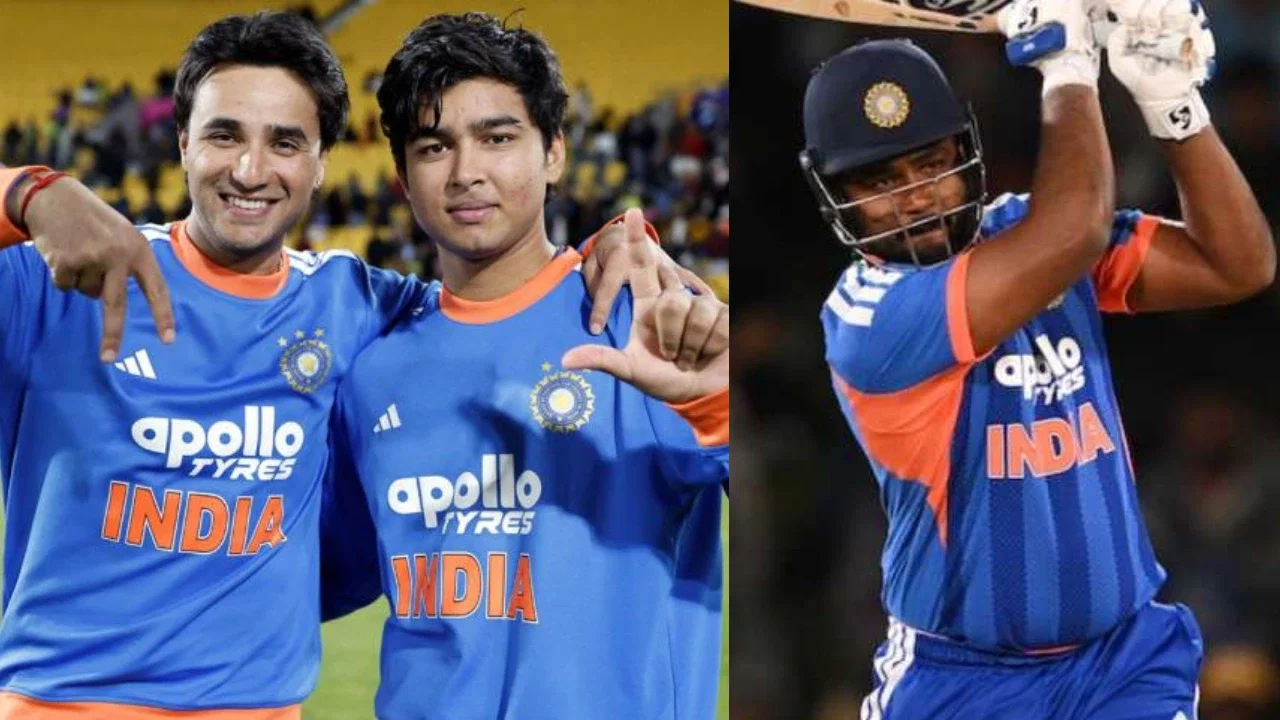
Abhishek Sharma Praises Sanju Samson’s Selfless Call After India’s Record-Breaking T20I Chase
India’s emphatic victory over New Zealand in the third T20I was powered by spectacular batting, but Abhishek Sharma believes the team’s success began with an act of selflessness. The explosive opener praised Sanju Samson for willingly moving down the order to make room for teenage batter Vaibhav Sooryavanshi at the top.
India chased New Zealand’s target of 199 in just 13.2 overs, winning by six wickets and taking a 3-0 lead in the five-match series. The performance set a new T20I benchmark: India scored 118 runs in the powerplay without losing a wicket. For Abhishek, however, the result reflected more than fearless stroke-play. It also showed how a flexible, team-first dressing room can help players perform with freedom.
Abhishek Sharma and Vaibhav Sooryavanshi Power India’s Chase
With Sooryavanshi promoted to open alongside Abhishek, India’s left-handed pair attacked from the outset. Their 133-run opening partnership came in only 7.1 overs, putting the chase firmly under India’s control before New Zealand could settle into a defensive plan.
Abhishek produced the innings of the night, striking 113 from just 38 deliveries. He smashed 11 sixes and nine fours, reached his half-century in 15 balls and brought up his century in 35. The innings was his fourth T20I hundred and one of the most explosive displays of the series.
At the other end, Sooryavanshi made an immediate impact with 40 from 19 balls, including four sixes and four fours. His aggressive start helped India maintain a remarkable scoring rate and ensured that the required total never became a serious obstacle.
The scale of the chase made the result a significant talking point for cricket fans searching for the latest India vs New Zealand T20I prediction and series analysis. India’s powerplay record, rapid opening stand and deep batting order all underlined why the team entered the match with considerable momentum.
Samson Moves Down the Order to Make Space for Sooryavanshi
Samson’s role in the reshuffle was especially notable because he had been successful as an opener. In the first T20I in Christchurch, he partnered Abhishek at the top and scored 67 from 33 balls during India’s successful chase of 226. His performance earned him the Player of the Match award.
When Ishan Kishan was unavailable for the second match, Sooryavanshi came into the side at number three while Samson remained an opener. For the third T20I, India adjusted the order again. With Kishan still sidelined, Sooryavanshi returned to his familiar opening position, while Samson accepted a move to number three.
Such changes can be difficult for batters, particularly when they involve giving up a preferred role after a strong performance. Yet Samson’s willingness to adapt gave the team another option at the top and allowed the young Sooryavanshi to bat where he was most comfortable.
Abhishek Says Team Unity Created Freedom to Attack
Speaking in a video shared by the Board of Control for Cricket in India, Abhishek highlighted Samson’s response as an example of the attitude that helped India produce such a dominant performance.
“We opened today, but Sanju Bhai has been opening, so we can see that everyone in the team is selfless,” Abhishek said. He added that the atmosphere created by the players’ willingness to adjust would make it easier for everyone to contribute.
Abhishek also acknowledged that players can naturally feel attached to their regular batting positions. He said Samson’s conduct—and the team’s broader readiness to accept changes—showed that individual preferences were not being placed ahead of the group’s objectives.
“There is a lot of shuffling; anyone can bat at any number, and everyone bats happily. I feel this is a sign of a champion team,” Abhishek said.
Why Batting Flexibility Matters in T20 Cricket
Batting orders in T20 cricket are increasingly shaped by match-ups, player form and the situation rather than by fixed roles alone. A team may promote a hard-hitting batter to exploit the powerplay, hold a left-hander back for a particular bowling combination, or move an experienced player down the order to strengthen the middle overs.
That flexibility works best when players trust the team’s plan and remain prepared to take on different responsibilities. Samson’s move was therefore more than a change on the scorecard. It demonstrated that India could make tactical adjustments without creating uncertainty or tension within the group.
For Sooryavanshi, the promotion offered a chance to use his attacking instincts from the first ball. For Samson, batting at number three provided an opportunity to support the innings if early wickets fell. In this match, India’s openers made that insurance largely unnecessary, but the decision still reflected careful planning and a strong squad culture.
India Take Commanding Series Lead
India’s six-wicket win gave them an unassailable 3-0 advantage in the five-match series and reinforced the team’s confidence ahead of the remaining fixtures. New Zealand had set a competitive target of 199, but the hosts’ bowlers were unable to contain India’s opening assault.
The record-breaking powerplay and Abhishek’s rapid century will dominate the match highlights, while Sooryavanshi’s contribution offered another encouraging sign for India. Just as important was Samson’s acceptance of a changed role—a decision Abhishek believes helped create the freedom behind the performance.
India’s display showed how individual brilliance and collective thinking can work together in T20 cricket. Abhishek supplied the remarkable innings, Sooryavanshi provided a fearless start, and Samson’s flexibility helped make the reshuffle possible. With the series already secured, the team’s ability to balance explosive batting with a selfless approach may remain one of its most valuable strengths.