AB de Villiers Backs Usman Khawaja’s Sandpapergate Claims, Says Entire Australia Team Knew
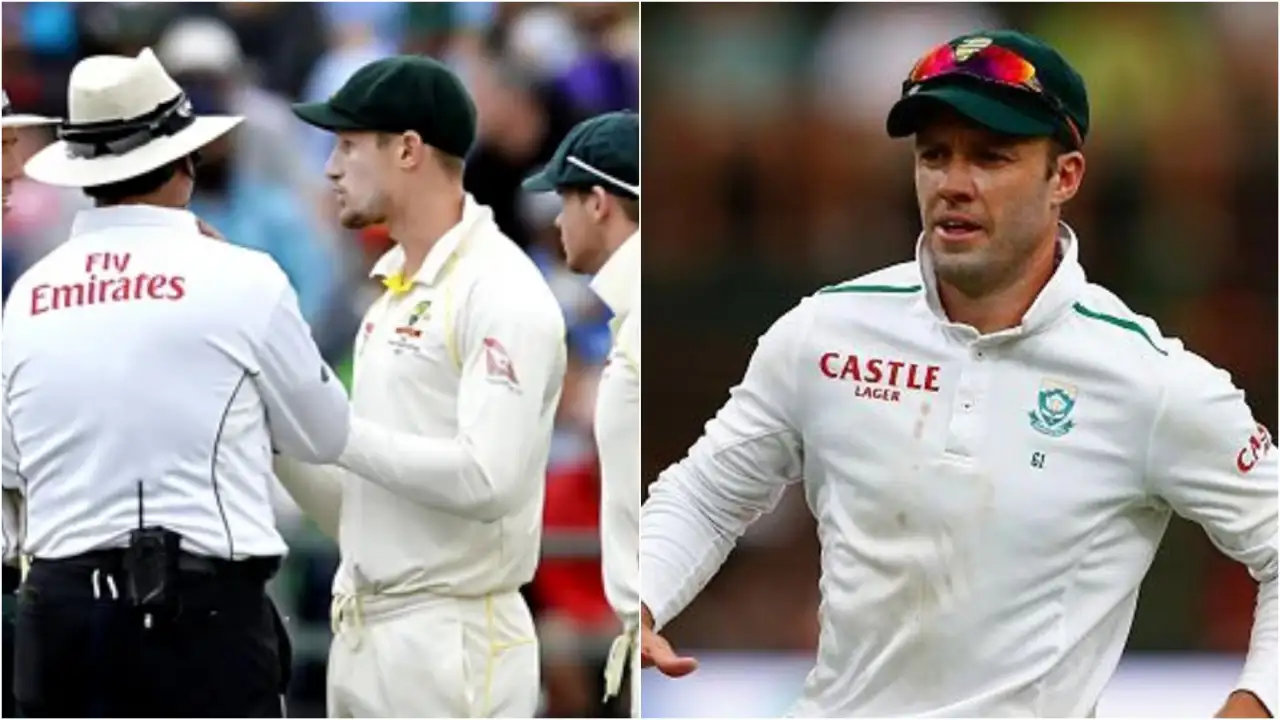
Former South Africa wicketkeeper-batter AB de Villiers has reignited debate over the 2018 Sandpapergate scandal, publicly supporting Usman Khawaja’s claim that knowledge of the ball-tampering plan extended beyond the three players punished by Cricket Australia. De Villiers said he had “zero per cent doubt” that the wider Australian team knew about the decision to alter the ball.
His comments add a prominent new voice to a controversy that has resurfaced almost eight years after the Cape Town Test. Khawaja’s recently published autobiography, Sabr, has prompted renewed discussion about what happened during Australia’s tour of South Africa—and whether the official account captured the full extent of the incident.
Sandpapergate returns to the headlines
The scandal erupted during the third Test at Newlands in Cape Town in 2018. Television footage showed Australian batter Cameron Bancroft using a small piece of sandpaper on the ball. The act was intended to change its condition and help Australia’s bowlers generate greater movement through the air.
Cricket Australia’s investigation resulted in significant suspensions. Bancroft, who was caught on camera, received a ban, while then-captain Steve Smith and vice-captain David Warner were also suspended for their roles in the episode. The sanctions led to widespread criticism, public apologies and a major reassessment of the team’s culture and leadership.
Khawaja was part of the touring squad and has now argued that responsibility did not stop with the three players who faced formal penalties. His account has challenged the idea that the ball-tampering plan was known only to a small group, prompting former players and commentators to revisit the events and ask how much the team understood at the time.
De Villiers questions the focus on the sandpaper
Speaking on his YouTube channel, de Villiers said the debate should not become narrowly focused on the object used to alter the ball. In his view, the central issue is whether the act was planned and whether teammates were aware of it.
“Why are we all so worried about the object that was used? The fact of the matter is, there was a premeditated decision made to do something illegal on the ground. And every single person knew about it. I’ve zero per cent doubt about that,” de Villiers said.
His comments amount to a strong endorsement of Khawaja’s version of events. They also underline a distinction at the heart of the current dispute: the difference between proving who physically carried out an action and establishing who knew about, approved or failed to challenge it.
That distinction matters because the original Cricket Australia sanctions were directed at specific players following an investigation. Khawaja’s account, and de Villiers’ support for it, raise broader questions about team communication, accountability and the standards expected in elite sport. However, public comments and recollections are not the same as new findings from an official inquiry, and the claims remain contested.
Did the ball-tampering begin before Cape Town?
De Villiers also suggested that Cape Town may not have been the only Test in the series where the ball’s condition raised questions. He pointed viewers to footage from the opening Test in Durban, saying he believed it was “no different” from the later match in Port Elizabeth.
“I can see everyone admitting now that it happened in Port Elizabeth [the second Test]. I can very much tell you, Durban [the first Test] was no different. Go look at the footage,” he said.
The claim adds another layer to the Sandpapergate debate, but it should be treated as an allegation rather than an established finding. The Cape Town incident was captured on camera and became the focus of Cricket Australia’s investigation. De Villiers’ reference to Durban invites renewed scrutiny of match footage, but it does not by itself demonstrate that ball tampering took place in the first Test.
For supporters seeking clarity, the distinction between suspicion and verified evidence is important. A fresh review would need to examine the available footage, match reports and testimony before any conclusion could be reached about events in Durban or elsewhere during the tour.
Former players divided over Khawaja’s account
Khawaja’s comments have drawn support from former players including Bancroft and Warner, as well as broadcasters Nasser Hussain and Michael Vaughan. De Villiers’ intervention adds the perspective of a leading South African cricketer who faced Australia during the same series.
Not everyone has agreed with Khawaja’s interpretation. Australian figures including Pat Cummins, Josh Hazlewood and former coach Darren Lehmann have pushed back against aspects of his claims. Cummins, who was a fast bowler in the 2018 squad and later became Australia’s captain, has directly rejected Khawaja’s suggestion that the entire team knew about the plan.
That disagreement has shifted the story from a discussion of a well-documented incident to a broader argument over memory, responsibility and what players understood inside the team environment. The passage of time may make those questions harder to resolve, particularly when accounts differ and no new official investigation has been announced.
What happens next in the Sandpapergate saga?
Some former cricketers have called on Cricket Australia to respond to the renewed claims, including questions about Cummins’ denial. So far, the governing body has not announced a new inquiry or released further findings that settle the dispute over how widely the plan was known.
Any official review would need to distinguish between the documented Cape Town incident, claims about other Tests and differing recollections of the team’s knowledge. It would also need to consider whether existing evidence can answer questions that were not resolved publicly at the time.
For now, there is no reliable prediction that Cricket Australia will reopen the case or impose further sanctions. The immediate impact is more likely to be continued public debate, with interviews, memoirs and archival footage shaping how fans interpret the scandal. De Villiers’ remarks have made that discussion harder to ignore, but they do not amount to an official verdict.
Sandpapergate remains one of modern cricket’s most damaging controversies because it touched not only on the rules of the game but also on trust in leadership and team culture. Khawaja’s account and de Villiers’ emphatic support have reopened those questions. Whether the renewed attention produces fresh evidence—or simply deepens the divide between competing accounts—will determine the next chapter of the saga.