Harbhajan Singh Backs Simon Doull’s Criticism of Glenn Phillips’ Diving Effort
Glenn Phillips is widely regarded as one of cricket’s most athletic fielders, but his attempted diving stop during the third T20I between India and New Zealand has sparked debate over whether the spectacular effort was necessary. Former India spinner Harbhajan Singh appeared to agree with commentator Simon Doull’s criticism after sharing a social media post questioning Phillips’ decision to launch himself at the ball.
The moment came during India’s rapid chase of New Zealand’s target of 199 at Hnry Stadium in Wellington. Phillips sprinted in and dived to his left as Abhishek Sharma’s airborne shot travelled towards the mid-wicket boundary. He could not reach the ball, which sailed past him and raced away for four.
Why Simon Doull questioned the attempted stop
Doull, commentating on the match, suggested Phillips had enough time and space to take a more controlled route towards the ball rather than attempt a dramatic dive. In his view, the fielder’s position and the shot’s trajectory did not demand such a high-risk intervention.
“You don’t need to do it,” Doull said on air, arguing that Phillips could have moved around the boundary edge. He also noted that the ball was around head height when it passed the fielder’s hand, questioning whether the dive offered a realistic chance of stopping it.
Harbhajan later reposted a message on X that described Phillips as a “performative fielder” and said there was “literally no need” for the attempt. The former spinner’s post brought wider attention to the exchange, turning a brief fielding moment into a talking point about decision-making and showmanship in modern cricket.
The criticism does not erase Phillips’ reputation as an exceptional fielder. His speed, reach and willingness to attempt difficult stops have made him a valuable presence in the field. But the episode highlights a familiar cricketing question: when does athletic commitment improve a team’s chances, and when might a simpler, lower-risk option be more effective?
Abhishek Sharma powers India’s record-breaking chase
The debate over Phillips’ dive was quickly overshadowed by India’s extraordinary batting display. Abhishek Sharma produced another explosive performance, smashing 113 from only 38 balls as India chased down New Zealand’s 199-run target in just 13.2 overs. India finished on 199 for four, winning by six wickets with 40 balls remaining.
Abhishek was supported by Vaibhav Sooryavanshi, who struck 45 from 19 deliveries. The opening pair added 133 runs in just 43 balls, giving India a commanding platform and putting the required rate under pressure almost immediately. Their aggressive start meant the chase moved at a pace that left New Zealand with little time to reset their plans.
India’s successful pursuit was among the fastest chases of a target of at least 190 in men’s T20 cricket, measured by balls remaining. Only Estonia’s chase of 192 against Cyprus in Episkopi in 2024, completed with 42 deliveries to spare, had more balls left in a successful pursuit of a target in that range.
The result also surpassed India’s previous best successful chase against a full-member nation, according to the match details. India had set that mark against New Zealand in Raipur earlier in 2026, when they chased 209 with 28 balls remaining. The Wellington performance raised the bar again, underlining the team’s growing confidence in high-scoring T20 conditions.
New Zealand’s total looked competitive before India’s assault
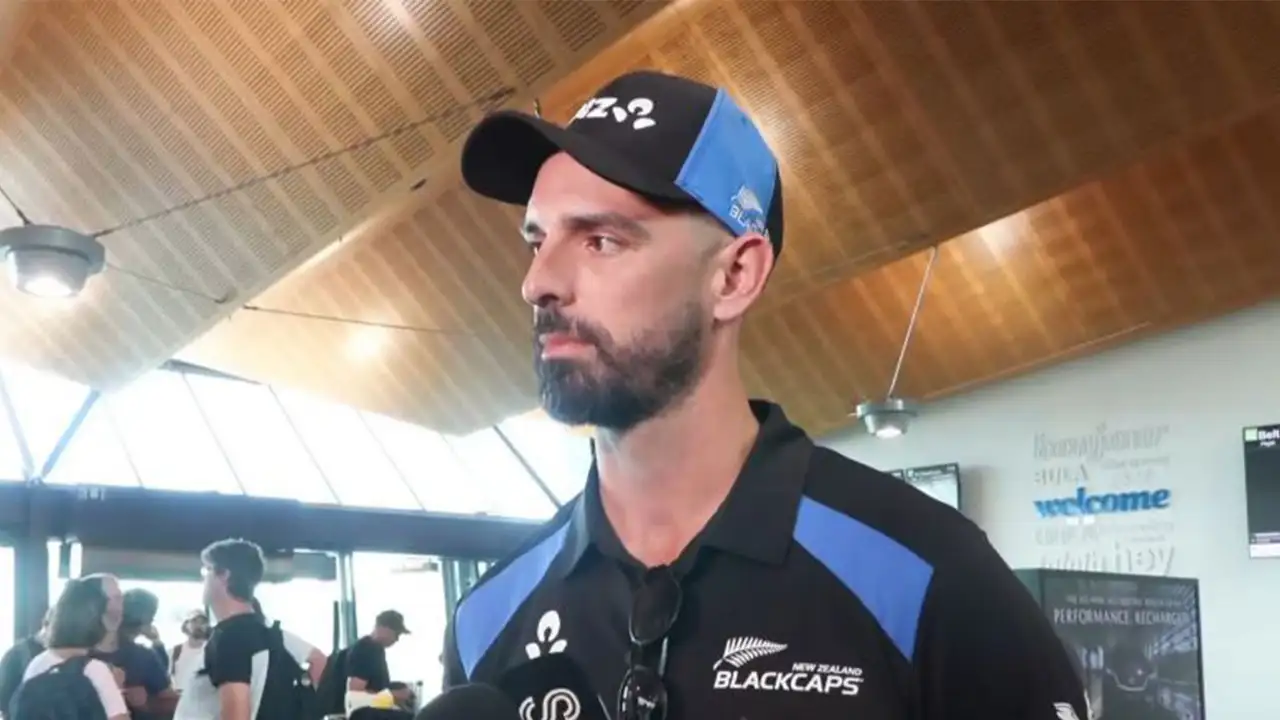
New Zealand captain Mitchell Santner acknowledged that his side had assembled a total they believed could be defended. He pointed to the partnership between Daryl Mitchell and Bevon Jacobs as an important phase of the hosts’ innings, saying the pair had helped keep the team on course for a score close to 200.
“I think the way that Daryl and BJ kind of got that partnership together, we tracked for 200 there, and obviously 200 is nice,” Santner said. He described that figure as a strong total on the surface, but conceded that India’s batters made it difficult to protect once they found their rhythm.
Santner also credited India’s bowlers for their execution late in New Zealand’s innings, particularly their use of yorkers. Those deliveries helped limit the hosts’ scoring at the death and kept the target within reach. However, the Indian openers’ powerplay assault soon changed the match’s momentum.
“Pretty tough to stop those guys when they’re going,” Santner said, noting that he had seen similar hitting in the IPL and had now witnessed it in New Zealand. He also stressed the importance of the powerplay, a phase in which India established control through fearless stroke play.
Prediction: India’s aggressive approach will remain a major threat
India’s chase offered a clear indication of how quickly a T20 contest can shift when an opening pair attacks from the first over. A total near 200 can be highly competitive, but it becomes vulnerable if the batting side scores freely in the powerplay and keeps wickets in hand. Abhishek and Sooryavanshi did both, forcing New Zealand’s bowlers to defend rather than dictate terms.
The match also provides a useful lesson for fielding sides. Athleticism can create game-changing moments, but sound positioning and risk assessment matter just as much. Phillips’ attempted stop may have been intended to save a boundary, yet Doull’s criticism reflects the fine margins involved: a fielder must judge not only whether a ball can be reached, but whether the chosen route gives the team the best chance of stopping it.
For India, the bigger takeaway was the scale of their batting momentum. If Abhishek continues to convert early opportunities into rapid, substantial scores, and his partners maintain the same attacking intent, India will remain a formidable opponent in T20 cricket. New Zealand, meanwhile, will need to find ways to slow the powerplay surge and make opponents work harder for totals that once seemed comfortably defendable.